Choosing a 17x17x4 Air Filter for Allergies and Asthma
By Kate Sannella | Published November 6, 2026 | Updated November 6, 2026
TL;DR
A MERV 11 or MERV 13 17x17x4 air filter is the practical choice for most allergy and asthma homes. Its 4-inch depth traps pollen and fine dust without choking airflow, and it works best changed about every six weeks.
After comparing the EPA's MERV tables with two field studies, I'd call MERV 13 the best 17x17x4 filter for allergy sufferers, as long as your blower handles it. MERV 13 captures at least 90 percent of particles between 3 and 10 microns, a range that includes many mold spores and larger dander particles. If your system is older or already runs loud, MERV 11 is the safer middle ground.
Key Takeaways
MERV 13 is the allergy sweet spot: The EPA suggests at least MERV 13 where a system can handle it.
Change every six weeks: Allergy and asthma homes should replace a 17x17x4 filter about that often.
Filters can't solve dust mites alone: Washing bedding and controlling humidity matter more.
Why Does a 4-Inch 17x17 Filter Work Better for Allergies?
A 17x17x4 filter is a 4-inch-deep pleated air filter that slides into a media cabinet or filter rack near the air handler. That depth holds several times more pleated media than common 1-inch sizes like a standard 25x25x1 HVAC filter, a 12x24x1 pleated filter, a 14x24x1 pleated filter, or a bulk pack of 16x20x1 filters, so air moves through it more slowly and evenly. Slower air means better particle capture with less strain on the blower.
17x17x4 is the nominal size, and the actual frame runs smaller. While researching this guide, I found one product page listing the actual depth as both 3.63 and 3.75 inches, so copy the numbers printed on your old filter. A loose filter lets air sneak around the edges. Other 4-inch sizes work the same way, like a 15x20x4 MERV 8 filter or an 18x24x4 MERV 11 filter.
Which MERV Rating Should You Choose for Allergies and Asthma?
MERV 13 is the best everyday 17x17x4 rating for allergy and asthma homes, and MERV 11 is the fallback for systems that can't handle extra resistance. Here's how I'd match the rating to your home:
Mild allergies or pets: MERV 11 handles pollen and dander with the least airflow risk.
Asthma, stronger allergies, or smoke days: MERV 13 catches the fine particles that matter most.
Older or noisy system: Start at MERV 11 and step up only if airflow stays strong.
MERV 8: Captures at least 70 percent of 3 to 10 micron particles. A 17x17x4 MERV 8 two-pack is easy to find in stores.
MERV 11: Captures at least 85 percent of 3 to 10 micron particles and at least 65 percent of 1 to 3 micron particles. A solid pick for pet dander and mild allergies, and 17x17x4 MERV 11 two-packs sell at major retailers and online marketplaces.
MERV 13: Captures at least 90, 85, and 50 percent across the three size ranges in the EPA's explanation of MERV ratings. The best fit for asthma.
If you're still deciding, you can compare 4-inch 17x17 filters in MERV 8, 11, and 13 side by side, including how each rating handles pet dander and smoke. For basic dust control, there's also a dedicated 17x17x4 MERV 8 page, and Canadian readers can shop this French-language 17x17x4 filter page.
Is a 17x17x4 MERV 13 Filter Too Restrictive for My System?
Usually not. Lawrence Berkeley National Laboratory researchers found that MERV 10 to 13 filters changed blower energy by less than about 5 percent in their simulations. The real airflow trouble showed up with MERV 16 filters. If an older system struggles with MERV 11, air conditioning replacement may be worth pricing.
Does a 17x17x4 Filter Help During Pollen Season?
Yes. Whole pollen grains are large, so a MERV 11 or MERV 13 17x17x4 filter catches them easily. Keep windows closed on high-count days.
Florida has more frequent and longer pollen seasons than much of the country, according to University of Florida IFAS horticulture experts. Trees pollinate in winter and spring, grasses from spring through fall, and weeds in almost any season.
Will a 17x17x4 Filter Reduce Dust Mites?
A 17x17x4 filter only partly reduces dust mites, and this finding surprised me most. A review of home dust mite interventions found that very little mite allergen stays airborne for more than 10 to 20 minutes. Most settles back into bedding and carpet. A 17x17x4 allergen furnace filter catches what gets airborne during cleaning, but the bigger wins happen in the bedroom, where MedlinePlus guidance on dust allergies focuses.
Wash bedding weekly: Use hot water, around 130 to 140°F, for sheets and pillowcases.
Cover the bed: Put mite-proof covers on mattresses and pillows.
Control humidity: Keep indoor humidity between 30 and 50 percent, since mites thrive in warm, damp rooms. Florida homes fight this year-round. Constant humidity also wears on HVAC equipment, and some homeowners pick filters made for moist climates.
Vacuum smarter: A HEPA-equipped vacuum keeps cleaning from stirring dust back up.
Add a bedroom purifier: An air purifier for dust catches what cleaning stirs up.
How Often Should Allergy Homes Change a 17x17x4 Filter?
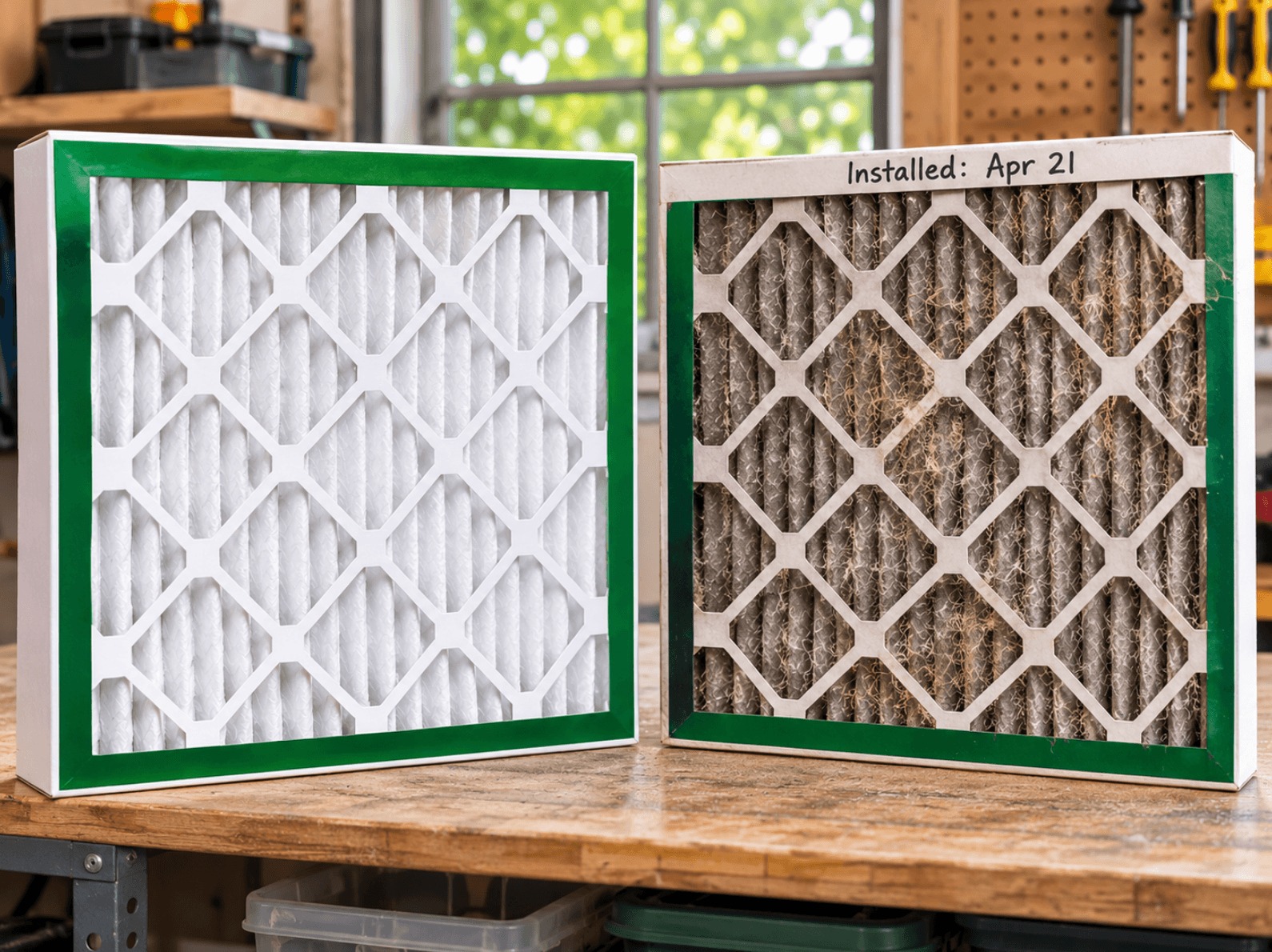
Allergy and asthma homes should change a 17x17x4 filter about every six weeks, as the 17x17x4 sizing and MERV guide linked above recommends, compared with 60 to 90 days for a typical household. ENERGY STAR's maintenance checklist also advises a monthly check. Change sooner if the pleats look gray, or after a smoke event (see this guide to using wildfire and smoke maps), a renovation, or a heavy pollen stretch.
What it really costs: When I priced options in the 17x17x4 sizing and MERV guide in November 2026, two-packs ran about $27 per filter and bulk packs closer to $18. A six-week schedule works out to roughly nine filters a year, or about 64 cents a day at two-pack prices and 43 cents in bulk. A multi-pack or auto-delivery plan beats buying one at a time.
Can a UV Light Replace a Good Air Filter?
UV lights are this site's focus, so I'll be direct: a UV light can't replace a filter. A UV-C lamp in your air handler targets mold and bacteria growing on the cooling coil and drain pan, though the EPA notes that typical home UV air cleaners have limited power to kill mold and that dead mold spores can still trigger allergies. A UV lamp doesn't trap anything, so particles keep circulating. Start with the benefits of installing UV lights in HVAC systems before you decide.
Author Insight
“After digging through the research, the lesson that stuck with me is simple: a mid-range filter changed on time beats a premium filter left in too long.” Kate Sannella, author
3 Supporting Statistics: What the Research Shows
48 percent less indoor fine particle pollution
Central-system filters and standalone air cleaners together cut indoor fine particles by 48 percent.
The two-year study followed 191 children with asthma in two California cities.
Symptoms did not drop, so pair filtration with an asthma action plan.
Source: California Air Resources Board
Up to 39 percent fewer outdoor fine particles indoors
Berkeley Lab modeled U.S. homes against a no-filter baseline.
MERV 6 cut indoor levels of outdoor fine particles by 6 percent, MERV 11 by 19 percent, and MERV 14 by 39 percent.
27.8 million people in the U.S. have asthma
That's 8.4 percent of the population in 2023 survey data.
Essential Resources: 7 Trusted Guides for Choosing a 17x17x4 Air Filter
1. Know When a 4-Inch Filter Is the Smarter Upgrade
The Center for Energy and Environment advises keeping 1-inch filters at MERV 8 or lower and moving to a 4-inch filter for higher filtration. https://www.mncee.org/furnace-filters-and-health
2. Follow the Filtration Industry's Best Practices
The National Air Filtration Association's residential guideline explains how to choose and maintain home HVAC filters. https://www.nafahq.org/residential/
3. Confirm Your System Can Handle a Higher MERV
ASHRAE advises checking that a system can handle added resistance before any filter upgrade. https://www.ashrae.org/technical-resources/filtration-disinfection
4. Build a Whole-Home Allergy Plan
Allergy & Asthma Network explains why air filtration works best as one part of a broader allergen plan. https://allergyasthmanetwork.org/news/filter-facts-how-air-cleaners-help/
5. Tackle Dust Mites Beyond the Filter
The American Lung Association explains how dust mites affect breathing and which household steps keep them in check. https://www.lung.org/clean-air/indoor-air/indoor-air-pollutants/dust-mites
6. Know When Outdoor Air Calls for Action
AirNow's guide to the 0 to 500 Air Quality Index shows when outdoor conditions call for closed windows and an early filter check. https://www.airnow.gov/aqi/aqi-basics/
7. Save Energy With On-Time Filter Changes
The U.S. Department of Energy reports that replacing a dirty, clogged filter can lower air conditioner energy use by 5 to 15 percent. https://www.energy.gov/energysaver/maintaining-your-air-conditioner
Final Thoughts and Opinion
My take after working through the research:
Most people worry about the wrong thing: Berkeley Lab found MERV 10 to 13 filters barely moved blower energy.
Long filter life is the real risk: A 4-inch filter's reputation tempts people to leave it in for half a year.
A filter is the foundation, not the cure: The California study cut fine particles by 48 percent, yet reported symptoms didn't drop.
Florida homes need a steady rhythm: Pollen seasons barely pause, so I'd treat the filter like a recurring bill and save the real effort for the bedroom.
Don't take your indoor air for granted!
Next Steps
Check: Note the size and airflow arrow on your current filter.
Choose: Pick MERV 13 from the 17x17x4 sizing and MERV guide. Use MERV 11 for older or noisy systems.
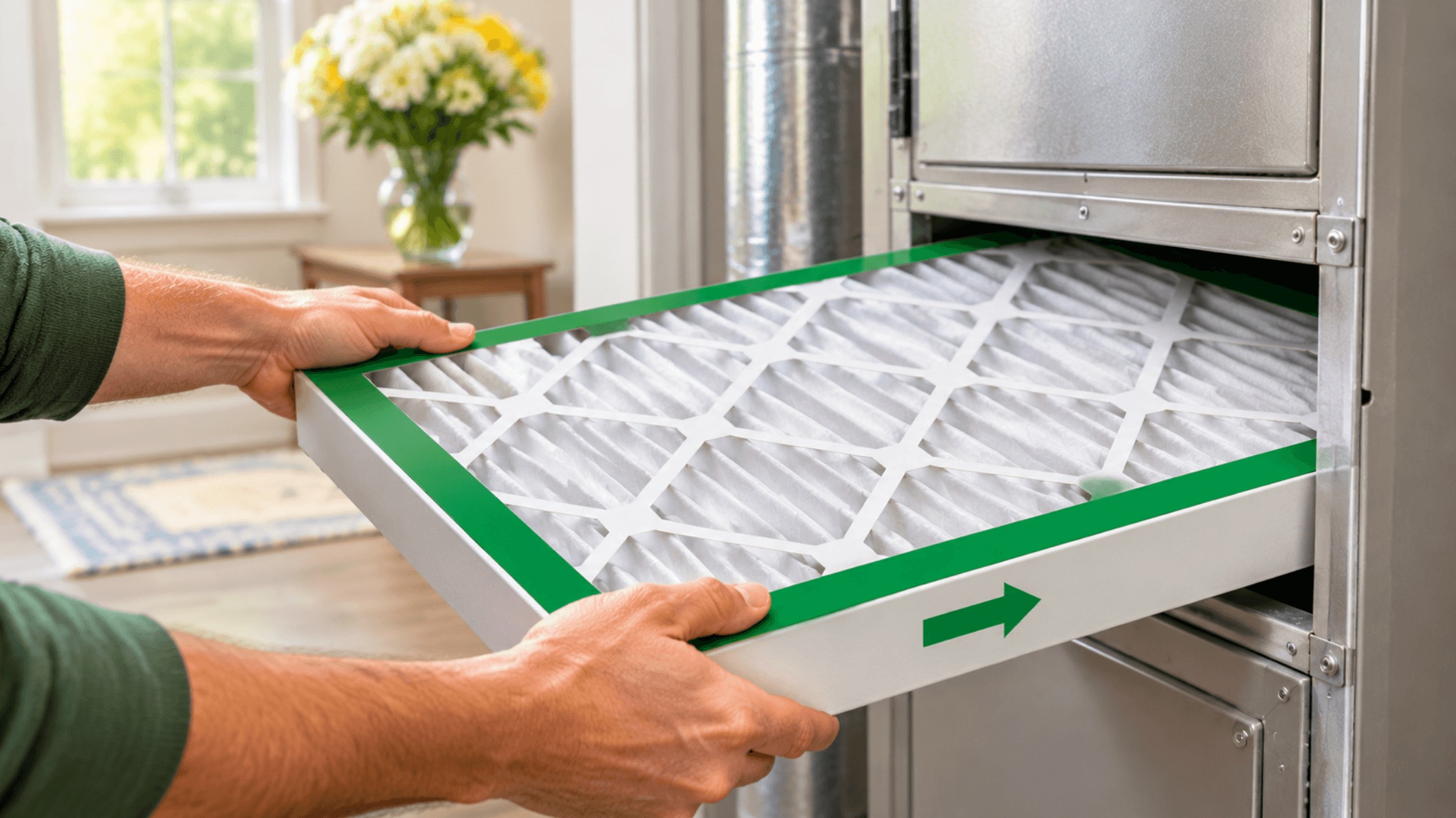
Install: Turn the system off. Point the arrow toward the air handler. Date the frame. HVAC Near Me covers the basics.
Schedule: Check monthly. Change every six weeks.
Watch airflow: Louder blower or bowed filter? Step down to MERV 11 and call a technician, or see these Palm Beach Gardens HVAC repair tips.
Breathe Easier With the Right 17x17x4 Air Filter
Choosing a 17x17x4 air filter for allergies and asthma comes down to the right MERV rating and a steady change schedule. Check the size on your current filter tonight, then set your first six-week reminder.
Frequently Asked Questions
Is a 17x17x4 MERV 13 Filter Good for Asthma?
Yes. A 17x17x4 MERV 13 filter captures the fine particles that often trigger asthma. Confirm your blower handles it, and keep following the asthma action plan you build with your doctor.
Can I Use a 1-Inch Filter in a 4-Inch Slot?
No. A thinner filter leaves a gap that lets air bypass the media entirely. Use the 4-inch depth your cabinet was built for. The same goes for 2-inch filters, like a 17x17x2 MERV 8 two-pack or a 15x15x2 filter.
Should I Put a HEPA Filter in My 17x17x4 Slot?
Most residential systems aren't built to push air through true HEPA media, and HEPA filters are common in portable air cleaners.
Glossary
MERV (Minimum Efficiency Reporting Value): A 1 to 16 rating from the ASHRAE 52.2 test method that measures how well a filter captures particles between 0.3 and 10 microns.
Static pressure: The resistance air meets as it moves through ducts and filters.
Electret media: Filter fibers that hold a static charge to help trap fine particles. See how an electret air filter works.
Dust mite allergen: Proteins in dust mite waste and body fragments that trigger allergy and asthma symptoms.
Learn more about HVAC Care from one of our HVAC solutions branches…
Filterbuy HVAC Solutions - Weston FL
2573 Mayfair Lane Weston FL 33327
(754) 296-3528
https://maps.app.goo.gl/E3tjmKf5VSWYghGc7


